Tuesday, November 5, 2013

Urban Community Gardens

http://www.epa.gov/brownfields/urbanag/steps.htm

        Although the creation of urban community gardens benefits a great deal of people, this up-in-coming discovery is made to benefit low-income communities and communities of different races. It is a way for the community to come together and benefit the group as a whole in many different ways. First, urban community gardens are a way for communities to eat healthier, especially for the children of these communities. Child obesity is one of the largest growing problems in the US today. By growing fruits, vegetables, and other crops, these kids are getting the opportunity to nourish their bodies in a better way. While cooking at home is usually a healthier choice, it also brings families together. Children are less likely to drop out of school, abuse alcohol and drugs, and cause other problems if they spend more time with their family. Developing that bond is an extremely important part of a child's adolescence. Although eating dinner at home is a small part of a child's day, it still can benefit them greatly in the long run. Not only can urban community gardens improve the overall health and bond of families, it can also produce local jobs and improve the economic conditions residing in the community. This raises the responsibility levels of the community as a whole and it can greatly benefit individuals because it can put these individuals back on their feet, step by step. Overall, the creation of urban community gardens has the possibility of lifting communities up and making them strive to live better lives.


Monday, November 4, 2013

Rock and Mineral Identification

12 Soil Orders of the World:

http://www.cals.uidaho.edu/soilorders/orders.htm

Soil type for this part of the country: Red clay is usually what people think Georgia soil consists of, but there are other types that also exist in this part of the country. According the map shown below, we live in a region of ultisols soil. Ultisols forms through the process of clay withering. This type of soil usually develops in warm, humid climates on old land. Certain parts of it may be acidic. Also, this soil is considered to be less fertile than other soils and not much activity goes on in it. On the other hand, this soil can be extremely productive if the clay is used in the right way.

http://www.cals.uidaho.edu/soilorders/i/USsoilorders.jpg

Solar Trajectory

Raw Data:


Calculations of Angles from Measurements:


Picture of Hand Drawn Plot:

Trees and Shrubs

Japanese Flowering Cherry—Prunus x yedoensis
Yoshino Cherry Tree: This tree has made the Cherry Blossom Festival possible for the Macon community. It is not only in Macon, but it is also in various parts of the United States. This is a flowering tree that can get up to be 50 feet high. It has a rounded shape, as you can see, and it can grow in various types of soils. The fragrance coming off of this tree is extremely potent, but, in my opinion, it is a good fragrance. I think that these trees add so much beauty to the city of Macon and it is a huge revenue booster during the festival.


Red Dogwood—Cornus florida 'Rubra'
Red Dogwood Tree: This tree is similar to the Yoshino cherry because they are both shades of pink and they also have similar shapes. This tree has red flowers in the spring and a purple-ish flower in the fall. It is found in the similar regions that the Yoshino Cherry is found and it also is a flowering tree. It only grows to be about 25 feet tall, but it can also grow in various soils.


Silver Maple—Acer saccharinum
Silver Maple Tree: This is an extremely fast growing tree. Its leaves are green on top and silvery-white on the inside. It also can grow in various types of soils, but this is not a flowering tree. It is a shade tree. It can grow to be 80 feet high and 50 feet wide. It has a vase shape and it resembles a Christmas tree in some aspects. 


Loblolly Pine—Pinus taeda
Loblolly Pine: We saw this tree on our walking tour. It is one of the fastest growing southern pines and it dark green needles with pine cones stemming off of it. It can grow to be 90 feet high and 35 feet wide. It is an evergreen tree as well. It has an oval shape and can also grow in various soils. These pines are extremely common in the south and they are seen all over campus. 

River Lab


Location of Transect Across the River and Elevation Profile:


Ocmulgee Trail and Riverwalk: Before we got to the River, I was not planning on getting into the water, but I decided to in the end. It was interesting walking across the muddy waters, but it was even more interesting how the orange traveled in the water. I watched the orange in both current 1 and current 2 and it was surprising that one of them was so much faster than the other. Overall, the lab was a great time to enjoy some of the nature that Macon has to offer.
          
Hyperlink for the Site http://www.maconga.org/listings/index.cfm?action=display&listingID=3990&menuID=27&hit=1

Blog 3: Mystery of the Megaflood

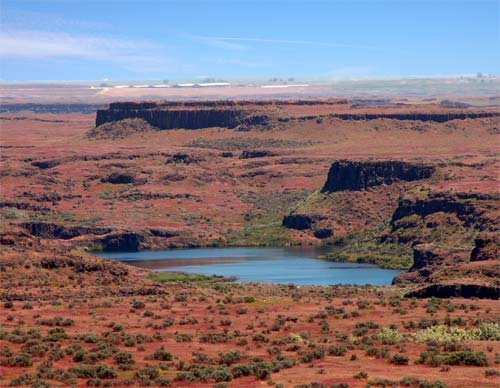
        Honestly, I had an extremely hard time following this movie, but I did get some information out of it in the end. What I gathered was that there was a scientists that theorized about an extremely large flood that possibly sculpted the area around Washington, Montana, Idaho, and Oregon. He said that this happened around 2 million years ago. The scientists had many critics that did not believe any of his information until more evidence was presented. In the Montana area, there were traces of an ice dam that melted and sent out millions and millions of gallons of water, which completely destroyed everything making these rocky areas. The channeled scablands in the Washington Area and it is a soil free landscape made by the glacial floods. Debates over the scablands and their formation happened for decades and it is now considered to be one of the greatest debates in the history of environmental sciences. Overall, it was hard for me to fully follow the computer graphics that was taking us across this area, but I thought the movie was interesting.
        For me, the most interesting part of the movie was the persistence of the scientist. Yes, I did learn something about how a part of our nation could have possibly been sculpted, but I think that there is a larger lesson resting in the movie. Even after so many people told him that his research and findings were incorrect, he continued to try to get his research out to the world. He never gave up and, because of that, his information is no longer getting criticized like before. I think that this is an extremely important message that anyone can get through the movie and it is an important message as well, especially for scientists and researchers. Without persistence, we would not be so medically and technologically advanced as we are today.

Channeled Scablands pictured below:
 

Blog 2: Typographic Map

This is topographic map drawn with the path tools on Google Earth: